Monday, July 2, 2012

STRAWBERRY LEMONADE CAKE W/LAYERS


STRAWBERRY LEMONADE CAKE W/LAYERS ~
(Just in time for the Fourth)

INGREDIENTS:
•One box of strawberry cake mix (plus oil, water and eggs as directed on box)
•8oz. Philadelphia Cream Cheese (softened to room temp.)
•1 packet (0.23oz.) of Kool-Aid Lemonade
•Yellow food coloring gel (as desired for color)
•2cups Jet-Puffed Marshmallow Creme
•8 oz. Cool Whip Topping
•Fresh strawberries to garnish.

DIRECTIONS:
•Make cake according to box and bake in 2- 9 inch round cake pans as directed. Turn finished cakes over on cake racks and allow to cool completely.
•Cream together cream cheese, lemonade and yellow food coloring until smooth.
•Mix marshmallow creme in and then mix in Cool Whip until completely smooth. Refrigerate until cake is cooled and cut.
•Cut each cake layer in half.
•Alternating layers of cake with layers of filling, assemble cake. End with layer of filling.
•Top with sliced strawberries.
•Refrigerate and serve chilled.

ENJOY
~Debbie~


SOURCE: https://www.facebook.com/photo.php?fbid=357907667616231&set=a.315453138528351.72812.119825421424458&type=1&ref=nf


Wednesday, May 9, 2012

*RECIPE* Pennsylvania Dutch Potato Pancakes


Ingredients:

4 pounds potatoes, peeled
2 large onions
1 egg
1 & 1/2 cups flour
2 tsp baking powder
1 tsp lemon juice
Ground nutmeg
Oil or vegetable shortening
1 Tbsp salt

Directions:

- Put raw potatoes and onions through food grinder, using fine blade. Drain thoroughly.
- Mix in egg, flour, baking powder, lemon juice, a pinch of nutmeg, and salt.
- Drop mixture by tablespoonfuls into two inches of hot oil (375*F).
- Fry for about ten minutes or until golden brown. Drain.

~Serves 6~

Friday, April 27, 2012

Best Brownies EVER! *Recipe*

Best Brownies EVER! (From scratch too!)

Courtesy of Angie at allrecipes.com. :-)

Ingredients

• 1/2 cup butter
• 1 cup white sugar
• 2 eggs
• 1 teaspoon vanilla extract
• 1/3 cup unsweetened cocoa powder
• 1/2 cup all-purpose flour
• 1/4 teaspoon salt
• 1/4 teaspoon baking powder

• 3 tablespoons butter, softened
• 3 tablespoons unsweetened cocoa powder
• 1 tablespoon honey
• 1 teaspoon vanilla extract
• 1 cup confectioners' sugar

Directions
1. Preheat oven to 350 degrees F (175 degrees C). Grease and flour an 8 inch square pan.
2. In a large saucepan, melt 1/2 cup butter. Remove from heat, and stir in sugar, eggs, and 1 teaspoon vanilla. Beat in 1/3 cup cocoa, 1/2 cup flour, salt, and baking powder. Spread batter into prepared pan.
3. Bake in preheated oven for 25 to 30 minutes. Do not overcook.
4. To Make Frosting: Combine 3 tablespoons butter, 3 tablespoons cocoa, 1 tablespoon honey, 1 teaspoon vanilla, and 1 cup confectioners' sugar. Frost brownies while they are still warm.


**I double the recipe for a family size pan (13x9) and increase baking time by 4 minutes. Frosting is optional of course. :-)

Monday, January 30, 2012

Peanut Butter Balls:

Ingredients:

*4 cups powdered sugar,

*18 oz creamy peanut butter,

*1/2 cup butter, softened,

*aprox. 12oz milk chocolate chips

*1/2 bar parafin wax.


Directions:

* Mix together peanut butter, sugar, and butter in a large bowl until all of the sugar has been mixed in then cover and refrigerate while melting the chocolate.

* Melt chocolate chips and wax on stovetop in a double boiler.

* Take peanut butter mixture out of the refrigerator and roll into small balls.

* Using a fork or toothpick, dip balls into chocolate and coat well.

* Let excess drip and then place on wax paper or greased foil.

* Let sit until chocolate is firm and then refrigerate.

Tuesday, January 17, 2012

Borax Free Laundry Detergent *Revised*

You can view my old recipe/post HERE, but after playing around with the recipe this year, I have made a few revisions, and this time I have photos!

To start with, you will need 2 bars of regular body soap. Any scent you would like, any brand you would prefer. Dr Bronners has good natural body soap in a variety of scents if you would like a natural soap. I used Softsoap or Dial most of the time just because it is more cost-efficient. :-)

Photo Credit http://igknowidea.blogspot.com

You will also need one cup of washing soda (Sodium Carbonate) and one cup of baking soda (Sodium Bicarbonate).

Photo Credit http://greenergreener.com

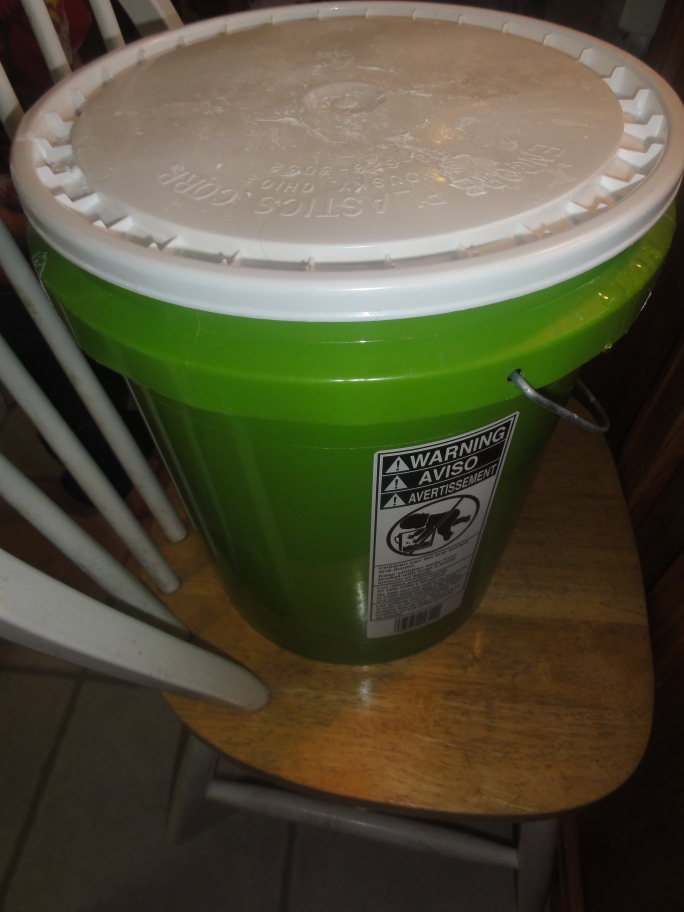
Hardware includes a large stock pot, a metal or wooden stirring utensil, a five gallon bucket with a lid (for safety), and hot tap water. I got my five gallon bucket from my dad who has a pool, I just washed it really well, but Hardware Stores like Lowes usually carry them for about $3-$5 each.

To begin:

#1 - Cut, chop, shred, or grate the bars of soap. The smaller the pieces, the better and quicker they will melt.

Photo Credit http://1.bp.blogspot.com

#2 - In your stockpot, combine your soap shreds and 2 cups of hot water, and stir over medium heat until soap pieces have melted. *Do not leave unattended for too long, because soap will burn.*


#3 - When soap has melted, add your additional 2 cups of hot water and stir together. Then reduce heat to medium-low and add your baking soda and washing soda. Stir well until the powders are dissolved.


#4 - At this point you can add a fragrance oil or essential oil of your choosing if you would like. For this batch, I am using coconut scented soap, and I am adding about a tablespoon of lemongrass essential oil for additional fragrance.


#5 - Now, pour your soap mixture *carefully, it's hot!* into your five gallon bucket, and fill the bucket to about 2 inches from the top with hot tap water.


#6 - Once the bucket is full, stir well to combine soap mixture and water, cover, and let sit overnight.


#7 - The next morning, you should notice a gel like consistency at the top of the bucket. This is good! This is how it is suppose to look. :-) Stir the contents of your bucket well, and you should now have a slightly lumpy looking thick liquid. This is your "concentrate". You can do what I do and just leave it in the bucket and use 1/2 cup per load. It make things easier. Be sure to stir the bucket contents about once per week. However, you can also use an old detergent container and fill it halfway with your concentrate and half with warm water. Shake gently before each use, and use 1 cup per load.

The total cost to make this detergent is about $3.00 per batch, and each batch can do about 100 loads at 1/2 cup per load, making the cost about $0.03 per load. :-)

A recipe for a powdered detergent can be found HERE.

Enjoy! Comment! Let us know how it works for you!

Wednesday, December 28, 2011

Why You Don't Want to Drink Pasteurized Milk

Posted By Dr. Mercola | March 26 2003 | 88,618 views


There is no substitute for clean, raw milk as a food, so far as children are concerned. Science has not yet succeeded in providing, in the pasteurized variety, those essential qualities that are the only real foundation for a healthy child.

Unfortunately, many grossly distorted statements are current regarding our milk supply. If we are to believe the protagonists of the Pasteurization-of-all-milk-at-all costs Party, raw milk is as good, or rather as bad, as rat poison--although as the Minister of Agriculture recently stated, "the human race existed long before Pasteur was heard of."

The process of pasteurization was debated in the House of Commons and the suggestion made that no raw milk should be sold for human consumption. This would mean installation of expensive machinery by every supplier, and if it should become compulsory there is little doubt that many small firms would shut down and the business pass in the hands of a few big dealers.

If we are to be compelled to drink pasteurized milk, we should at least understand what pasteurization means. It set out to accomplish two things: Destruction of certain disease-carrying germs and the prevention of souring milk. These results are obtained by keeping the milk at a temperature of 145 degrees to 150 degrees F for half an hour, at least, and then reducing the temperature to not more than 55 degrees F.

It is undoubtedly beneficial to destroy dangerous germs, but pasteurization does more than this--it kills off harmless and useful germs alike, and by subjecting the milk to high temperatures, destroys some nutritious constituents.

With regards to the prevention of souring, sour raw milk is very widely used. It is given to invalids, being easily digested, laxative in its properties, and not unpleasant to take. But, after pasteurization, the lactic acid bacilli are killed. The milk, in consequence, cannot become sour and quickly decomposes, while undesirable germs multiply very quickly.

Pasteurization's great claim to popularity is the widespread belief, fostered by its supporters that tuberculosis in children is caused by the harmful germs found in raw milk. Scientists have examined and tested thousands of milk samples, and experiments have been carried out on hundreds of animals in regard to this problem of disease-carrying by milk. But the one vital fact that seems to have been completely missed is that it is CLEAN, raw milk that is wanted. If this can be guaranteed, no other form of food for children can, or should, be allowed to take its place.

Dirty milk, of course, is like any other form of impure food--a definite menace. But Certified Grade A Milk, produced under Government supervision and guaranteed absolutely clean, is available practically all over the country and is the dairy farmer's answer to the pasteurization zealots.

Recent figures published regarding the spread of tuberculosis by milk show, among other facts, that over a period of five years, during which time 70 children belonging to a special organization received a pint of raw milk daily, only one case of the disease occurred. During a similar period when pasteurized milk had been given, 14 cases were reported.

Besides destroying part of the vitamin C contained in raw milk and encouraging growth of harmful bacteria, pasteurization turns the sugar of milk, known as lactose, into beta-lactose, which is far more soluble and therefore more rapidly absorbed in the system, with the result that the child soon becomes hungry again.
Probably pasteurization's worst offence is that it makes insoluble the major part of the calcium contained in raw milk. This frequently leads to rickets, bad teeth and nervous troubles, for sufficient calcium content is vital to children; and with the loss of phosphorus also associated with calcium, bone and brain formation suffer serious setbacks.

Pasteurization also destroys 20 percent of the iodine present in raw milk, causes constipation and generally takes from the milk its most vital qualities.

In the face of these facts--which are undeniable--what has the Pasteurization Party to say? Instead of compelling dealers to set up expensive machinery for turning raw milk into something that is definitely not what it sets out to be--a nutritious, health giving food--let them pass legislation making the dairy farmers produce clean, raw milk--that is, milk pure to drink with all its constituents unaltered.

RealMilk.com
 

Dr. Mercola's Comments:
 

So don’t waste your money on "organic" milk anymore. This is a waste of your resources. Redirect your energy to find real raw milk sources. Ideally, you can find a local farmer who will be willing to sell this to you. If you find one you will want to encourage him to consider restricting grains from the cow’s feed to improve the quality of the milk.
If you are unable to find a local dairy farmer who will cooperate with you please try this link: http://www.realmilk.com/where.html.
If you are in the Chicago area you can obtain raw milk from Michigan Amish farmers that bring it to the area every week or so.


Wednesday, July 20, 2011

Canning Tomato Sauce

I just canned my first jars of tomato sauce of the season, and thought that I might share with you how I did it. :-)

First, get some nice, healthy tomatoes. Rinse well in cold water.


Keep in mind that what you start with will decrease almost 50% in volume by the end of the process, so make how much you think you will use. I used about 20 large tomatoes and got four pints out of it. :-)

Peel the tomatoes using which ever method you prefer. Some prefer to blanch and peel, I simply used a paring knife.


Chop the peeled tomatoes and put them in a stock pot.


Then, either blend them with a stick blender, or otherwise mash them. I used my handy dandy, old-fashioned potato masher. :-)


When they are mashed well, set them to simmer, uncovered, on medium-low for 2-3 hours, or until desired consistency is reached, stirring often to prevent burning. Again, volume will likely be reduced by half.


When you've reached that consistency that you like, ladle into prepared jars leaving 1 inch of head space and hand tighten the lids on.


Pressure can for 15 minutes for pints, or 20 minutes for quarts, referencing the following altitude charts. Tomato sauce can be water bath canned if lemon juice is added, just add 1 Tablespoon of lemon juice per pint of tomato sauce, or 2 Tablespoons of lemon juice per quart.

You can also de-seed the tomatoes if you want to prepare a base for ketchup or tomato soup. :-)

See Simply Canning for more info as well.